Russia reportedly launches Kh-101 cruise missiles toward Ukraine in multi-wave strike
What happened
Ukrainian air defense command reported on Telegram that Russian forces conducted the first known air-launched Kh-101 cruise missile strikes of the current campaign against Ukraine, with launches expected to begin at 03:45 local time on September 8. The command warned of multiple launch waves targeting Ukrainian airspace. The Kh-101 is a strategic standoff cruise missile typically carried by long-range bombers. The alert was issued at 00:11 UTC on September 8.
Context and assessment
The reported Kh-101 deployment represents a potential shift in Russia's strike doctrine, introducing a new weapon system into the campaign. This comes after sustained Russian drone and missile activity over recent days, including overnight Shahed transits across Kyiv Oblast and prior air defense alerts warning of combined ballistic and cruise missile strikes. The timing aligns with Ukrainian officials' recent warnings of Russian winter escalation strategies and diplomatic speculation about de-escalation, suggesting Russia may be attempting to degrade Ukraine's air defenses or critical infrastructure ahead of potential negotiations. Concentrated strikes on Kyiv would target Ukraine's political and administrative center.
Sources and confidence
Reported solely by Telegram channel @war_monitor, a Ukrainian military monitoring account. Single-source reporting limits independent verification; no cross-confirmation from other Ukrainian military or Western intelligence channels has been identified. Confidence score of 6.0 reflects the authoritative nature of the source but absence of corroborating reports. Confirmation of actual impacts or interceptions would raise confidence significantly.
Location
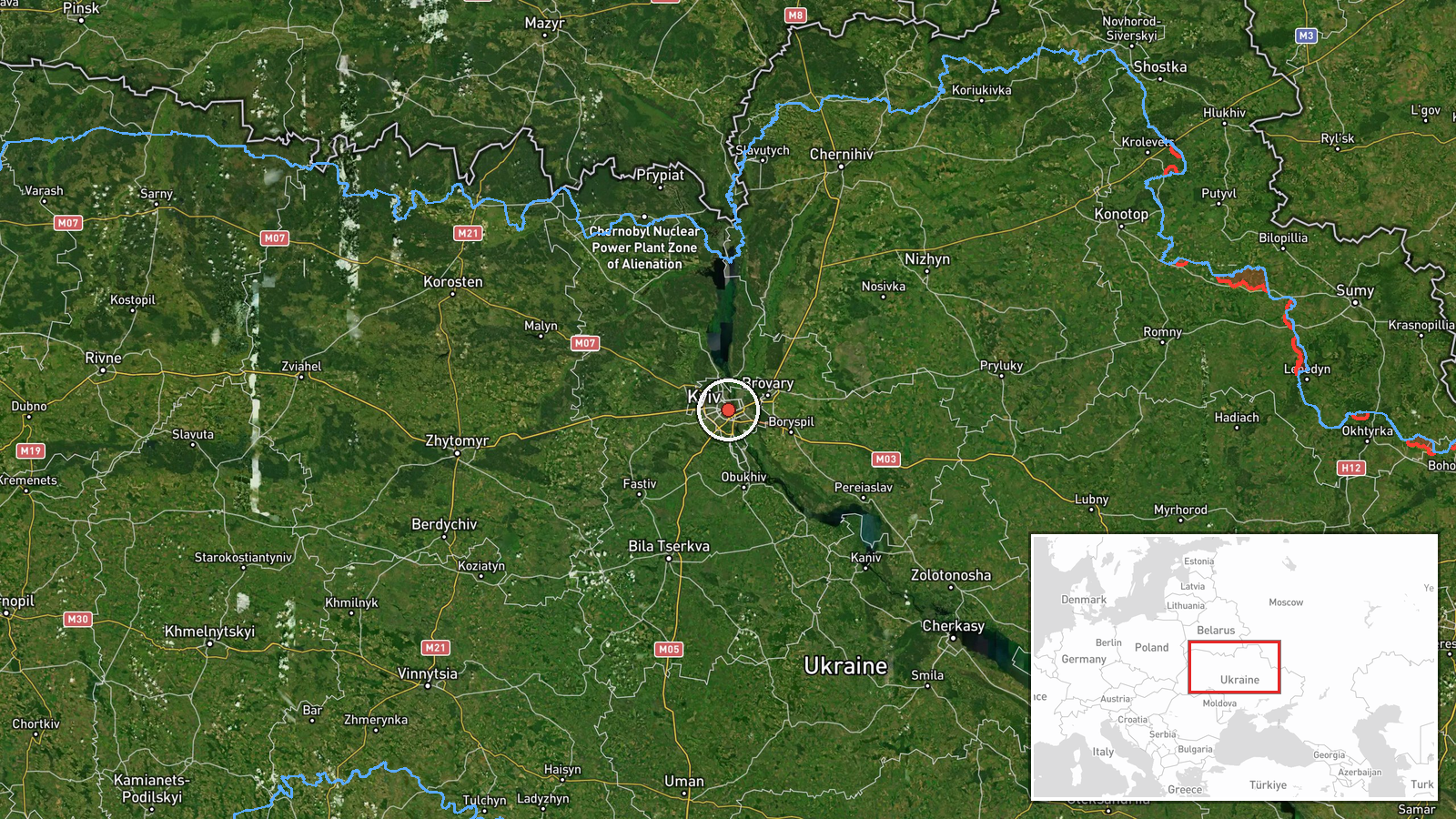
Kyiv and surrounding airspace, Ukraine's capital region on the Dnieper River. Located in north-central Ukraine approximately 100 kilometers from the Belarusian border. The city and its suburbs represent a high-priority strategic target for Russian strikes, housing government institutions, military command facilities, and critical infrastructure.
Related events nearby
- Ukraine reports medium-level ballistic missile threat overnight. Air raid alert issued across Kyiv Oblast as R2026-09-08 18:04 UTC · Siren · Kyiv, Kyiv Oblast, Ukraine
- President Zelensky appeals to the United States for ballistic missile air-defense packages to strengthen Ukrai2026-09-08 14:47 UTC · Statement · Kyiv, Kyiv Oblast, Ukraine
- Russian ballistic missiles struck Kyiv; footage captured two missiles impacting the same location seconds apar2026-09-08 14:03 UTC · Ballistic Missile · Kyiv, Kyiv Oblast, Ukraine
- Russia launched 166 drones and dozens of missiles against Kyiv overnight, striking the capital. Attack ended a2026-09-08 07:31 UTC · Ballistic Missile · Kyiv, Kyiv City, Ukraine
- Russian Shahed-136 kamikaze drones detected transiting Kyiv airspace. Three separate vectors tracked: 2x towar2026-09-08 17:27 UTC · Drone Transit · Brovary, Kyiv Oblast, Ukraine
▶ View this event on the live map
Intel Mapper aggregates open-source reports from monitored Telegram and X channels, geolocates them, cross-checks duplicates across sources and assigns a confidence score. Entries are updated as new confirmations arrive. Read how we verify events.