Energy infrastructure under sustained pressure; diplomatic initiatives compete with escalating strikes across Middle East and Ukraine
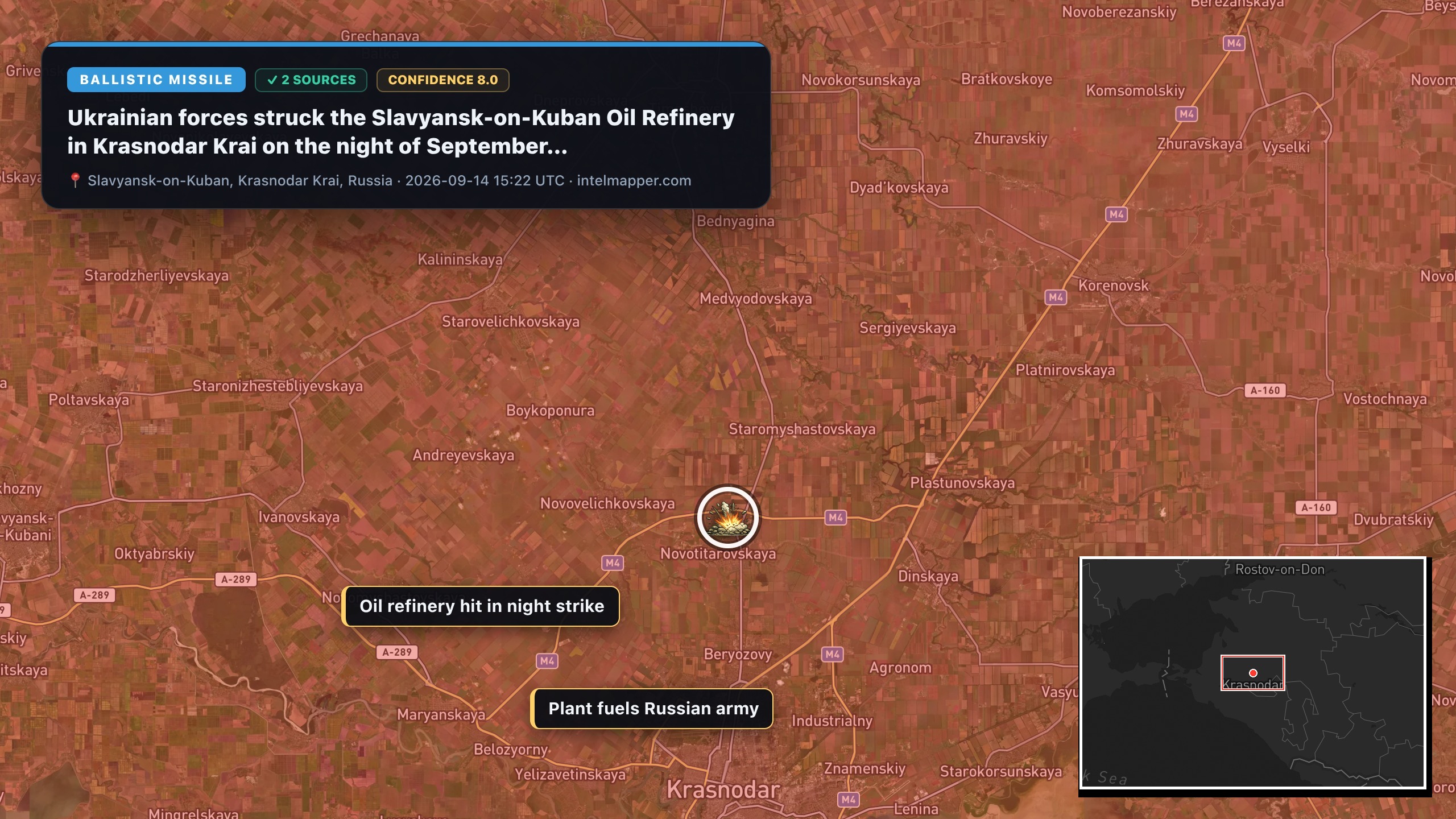
Ukrainian forces struck the Slavyansk-on-Kuban Oil Refinery in Krasnodar Krai on the night of September 12-13. The facility processes approx
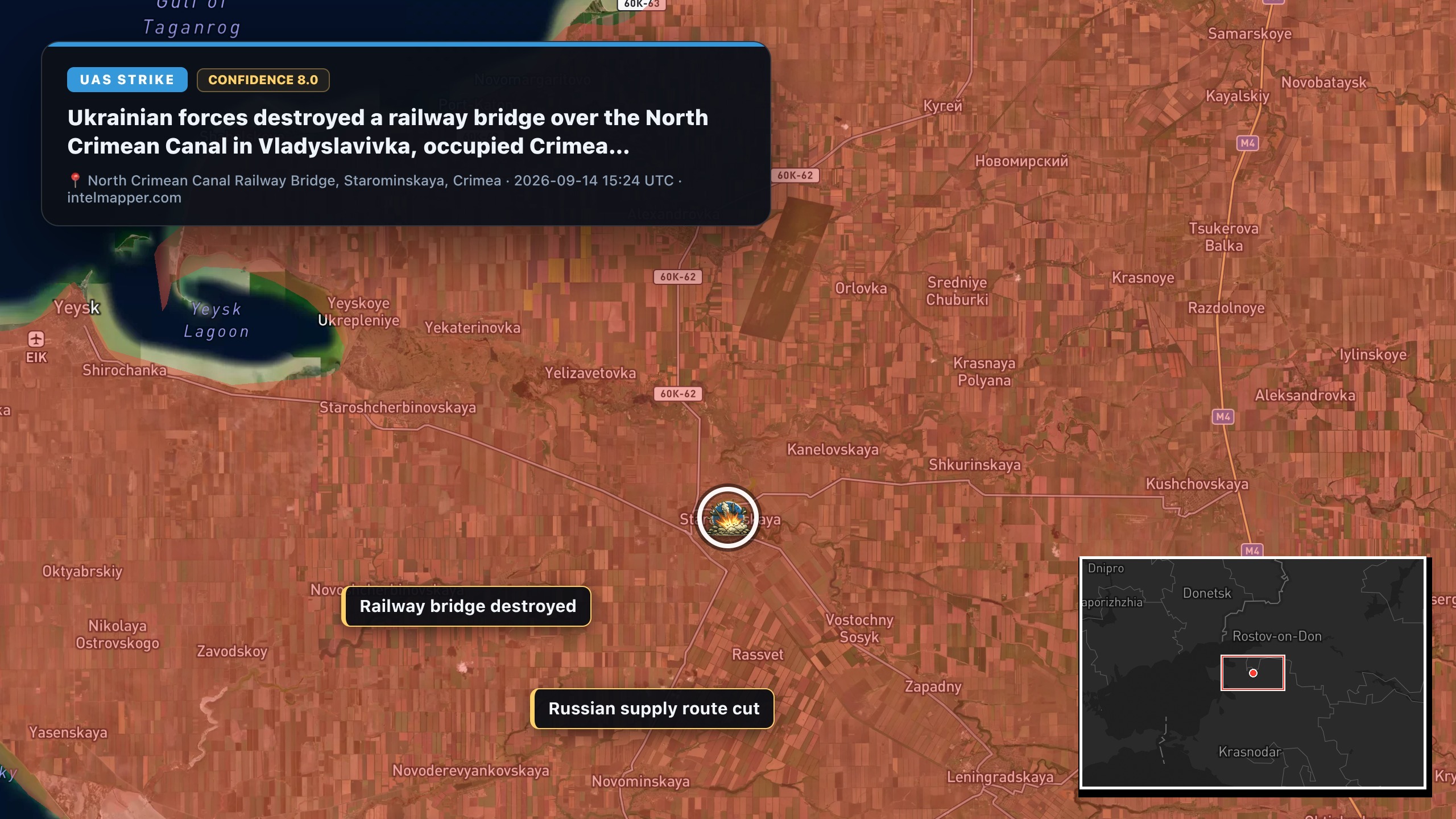
Ukrainian forces destroyed a railway bridge over the North Crimean Canal in Vladyslavivka, occupied Crimea. The bridge is a key Russian mili
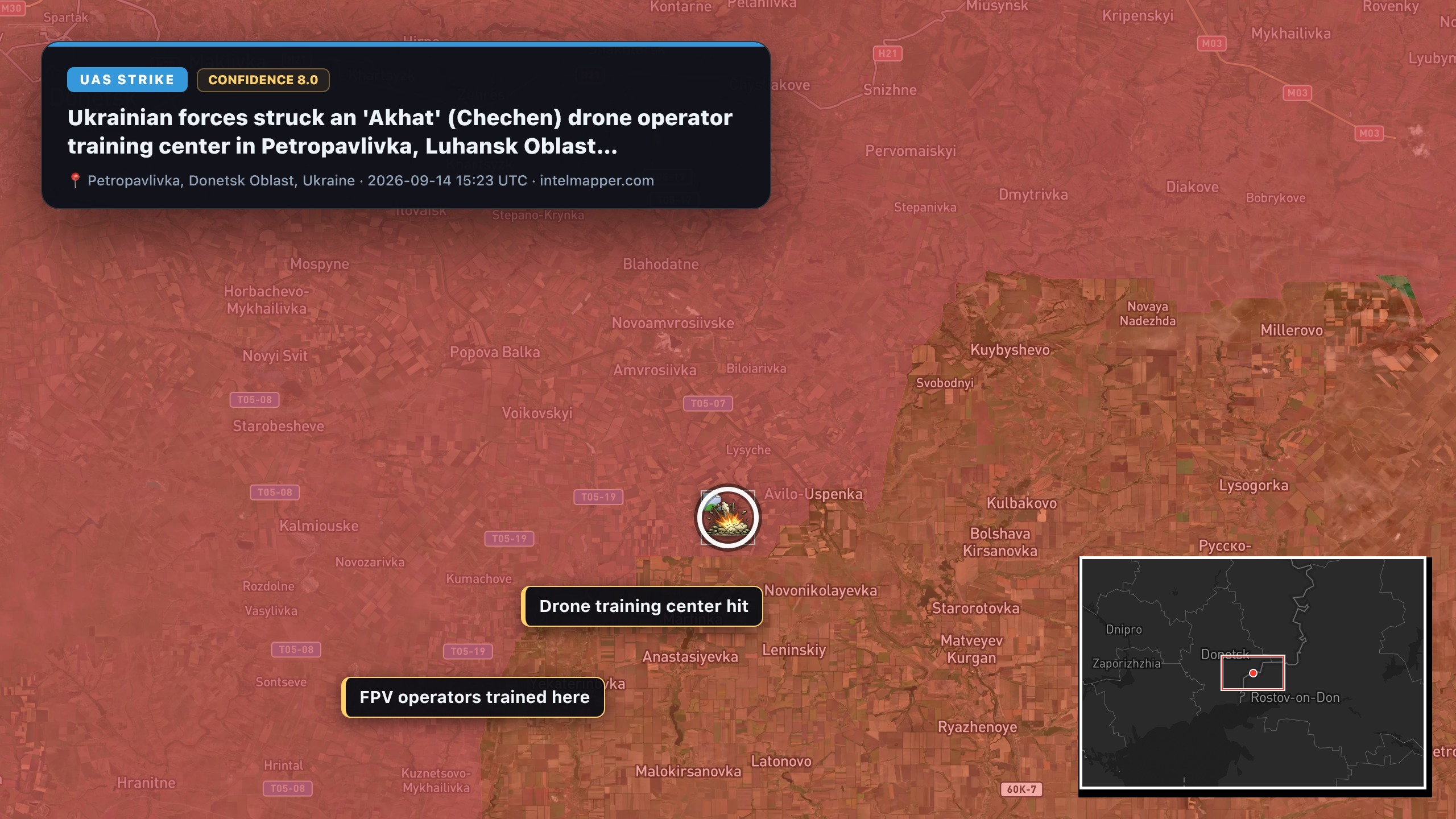
Ukrainian forces struck an 'Akhat' (Chechen) drone operator training center in Petropavlivka, Luhansk Oblast. The facility specialized in tr
Ukraine sustained intensive Russian drone operations while conducting deep-strike campaigns against Russian energy infrastructure. Ukrainian air defenses shot down or suppressed 85 Russian attack drones during the September 13-14 overnight assault, part of sustained Russian drone pressure involving 108 drones launched from multiple Russian regions. Simultaneously, Ukrainian forces executed strikes against strategic Russian targets: the Saratov Oil Refinery (7 million tons annual capacity), the Slavyansk-on-Kuban Oil Refinery (5.2 million tons capacity), and critically, the Novourengoyskyy gas condensate processing plant near Novy Urengoy—over 3,000 kilometers from Ukrainian territory—indicating extended-range strike capability. Russian drone operations killed civilians in Pavlohrad and struck a passenger train near the Poland border, where former CIA Director David Petraeus was evacuated. These operational patterns reflect mutual targeting of energy infrastructure asymmetric to geographic distance.
Diplomatic initiatives from both sides offered conditional restraint proposals but remained unverified. Trump claimed Ukraine agreed to halt strikes on Russian energy targets and Russia pledged reciprocal restraint—statements lacking independent confirmation from Kyiv or Moscow. President Zelensky conditionally proposed mutual restraint: if Russia halts strikes on Ukrainian energy infrastructure and supply routes, Ukraine would reciprocate by halting strikes on Russian energy facilities. Trump attributed global diesel price rises to the Russia-Ukraine war rather than Iranian actions. These competing claims suggest potential negotiation channels but no confirmed agreements. NATO Secretary General Mark Rutte warned Russian conscripts of high death risks and condemned Russian attacks on Ukrainian civilians, while German Chancellor Merz announced German troops deploying to NATO's eastern flank for the first time without volunteer status—signaling NATO's commitment despite ceasefire discussions.
Operational intensity remained high across all Ukrainian fronts with 208 reported combat clashes on September 14. Russia conducted 90 airstrikes using 286 guided bombs and deployed 11,727 kamikaze drones, maintaining the high-tempo operations characteristic of recent fighting. Ukrainian forces destroyed a critical North Crimean Canal railway bridge in occupied Crimea—a key Russian military supply route—and struck Novorossiysk Naval Base, damaging fuel storage and at least three vessels including minesweeper Zheleznyakov and a frigate. Ukrainian forces also struck a Chechen FPV drone training center in Luhansk and damaged a Mangust-class patrol boat in Sevastopol. The General Staff reported Ukrainian development of new-generation drone interceptors to counter Russian jet-powered Shahed variants. These tactical operations indicate Ukraine maintaining operational capability despite casualties and resource pressures.
Key developments
- Saudi Arabian oil infrastructure sustained confirmed damage from September 10 drone attacks on two East-West Pipeline pumping stations, with UK reportedly considering military support for energy asset defense.
- Ukraine conducted long-range strikes against Russian energy facilities including Novy Urengoy (3,000+ km away), while Russian drones continued intensive operations killing civilians and striking infrastructure.
- Trump claimed unverified agreements on energy infrastructure strike restraint between Ukraine and Russia; Zelensky proposed conditional mutual restraint pending Russian reciprocal halt to critical infrastructure targeting.
- Iran's IRGC claimed downing a US MQ-1 drone over the Strait of Hormuz; Austria blocked Iran's nuclear chief from IAEA conference under US pressure, illustrating ongoing sanctions constraints.
- Turkish diplomatic engagement with post-Assad Syria deepened through Foreign Minister visits; Iraq's PM offered de-escalation facilitation amid regional militarization.
- NATO reaffirmed support for Ukraine with German troops deploying to eastern flank for first time; Secretary General warned Russian conscripts of high death risks.
- Syrian government addressed nuclear transparency (73 tonnes uranium safeguarded) while managing domestic protests over fuel prices and unconfirmed security incidents.
Assessment
September 14 reflects continued militarization across both theatres with competing diplomatic initiatives offering conditional restraint but lacking confirmed implementation. Energy infrastructure remains a primary target across regions—Saudi oil facilities, Russian refineries, and Ukrainian critical supply routes—creating economic spillover pressure on global markets. Diplomatic openings toward Iran, Syria, and between Ukraine-Russia appear genuine but tentative, constrained by mutual distrust and ongoing military operations generating casualties and destruction that complicate negotiation credibility.
What to watch
Monitor whether claimed Ukraine-Russia energy infrastructure restraint agreements materialize operationally over next 48 hours, particularly Ukrainian strike patterns against Russian refineries and Russian drone targeting of Ukrainian critical infrastructure. Track developments from Netanyahu's UN address on September 25 for potential Israeli strategic statements on Lebanon operations and Iran policy. Observe whether Austria-led blocking of Iranian nuclear officials establishes precedent affecting Iran's IAEA participation. Watch for Turkish-Syrian normalization pace and Syrian domestic stability indicators, particularly fuel availability and security incidents. Monitor NATO deployments and German troop positioning consolidation. Track Houthi-US direct communications signaled by VP Vance for potential Yemen de-escalation signals.
Sources
This brief is compiled from the day's verified events; each entry links to the event page with media, confidence score and original reporting.
- Ukrainian forces struck the Slavyansk-on-Kuban Oil Refinery in Krasnodar Krai on the night of September 12-13. (Ballistic Missile, Slavyansk-on-Kuban, Krasnodar Krai, Russ)
- Ukrainian General Staff operational update (22:00, Sept 14): 225 combat clashes across all fronts. Russia cond (Statement, Eastern Ukraine Frontline (Donetsk, Luha)
- Ukrainian forces destroyed a railway bridge over the North Crimean Canal in Vladyslavivka, occupied Crimea. Th (UAS Strike, North Crimean Canal Railway Bridge, Star)
- Ukrainian forces struck an 'Akhat' (Chechen) drone operator training center in Petropavlivka, Luhansk Oblast. (UAS Strike, Petropavlivka, Donetsk Oblast, Ukraine)
- Ukrainian forces struck and damaged a Russian Mangust-class (Project 12150) high-speed patrol boat in Kozach B (Naval, Kozach Bay (Kazachya Bukhta), Sevastopol)
- Ukrainian forces struck Novorossiysk Naval Base in Krasnodar Krai on the night of September 8-9. Confirmed dam (Naval, Novorossiysk Naval Base, Krasnodar Krai,)
- Ukrainian forces struck the Saratov Oil Refinery (NPZ) in western Russia on the night of September 10-11. The (Ballistic Missile, Saratov, Saratov Oblast, Russia)
- Ukrainian forces struck the Novourengoyskyy ZPKT gas condensate processing plant (19.5 million tons/year capac (Ballistic Missile, Novy Urengoy, Yamalo-Nenets Autonomous O)
- Ukrainian General Staff reports defensive operations in Donetsk Oblast. Commends 3rd Army Corps, 66th and 125t (Statement, Donetsk Oblast, Ukraine)
- Ukrainian air defenses shot down/suppressed 85 Russian attack drones (Shahed, Geran, Paródiya types) during ov (Air Defense, Ukraine (Nationwide))
- Ukrainian General Staff daily operational update for September 14, 2026 (Day 1664). 208 combat clashes reporte (Statement, Ukraine (Nationwide))
- Commander-in-Chief of Ukrainian Armed Forces Mikhaylo Drapaty commemorates Tank Forces Day. He emphasizes the (Statement, Kyiv, Ukraine)
- Trump claims Ukraine agreed to halt strikes on Russian energy targets and Russia pledged reciprocal restraint. (Statement, Washington, D.C., USA)
- Ukrainian General Staff reports progress on developing new-generation drone interceptors to counter Russian je (Statement, Kyiv, Ukraine)