Ukrainian F-16 destroys Russian Geran-4 drone over Kyiv
What happened
A Ukrainian Air Force F-16 fighter jet intercepted and destroyed a Russian Geran-4 (Shahed variant) suicide drone using an air-to-air missile over Kyiv airspace on the morning of 1 October. The incident occurred during a sustained Russian drone campaign targeting the capital and surrounding oblast. The Geran-4 is a loitering munition derived from the Iranian Shahed design, modified for extended range and payload capacity.
Context and assessment
The shootdown occurred as part of an ongoing overnight Russian aerial assault spanning 29–30 September into the early hours of 1 October. Ukrainian air defense forces reportedly engaged 87 drones across multiple classes during this period, though individual F-16 intercepts represent a subset of total defensive activity. The reliance on fighter aircraft to counter drone attacks reflects both the scale of Russian sorties and the saturation challenges facing ground-based air defense systems. This incident may indicate either a tactical gap in layered defense or operational availability of Ukrainian fighters as a supplementary intercept asset. The timing and location over Ukraine's largest city underscores the strategic importance Russia places on striking the capital.
Sources and confidence
Reported by OSINT account @Osint613 on X with a single source. Confidence score of 6.0 reflects the authoritative nature of Ukrainian Air Force communications but limited corroboration at present. Confirmation from official Ukrainian military statements or Ukrainian Air Force channels would raise confidence. Absence of casualty or damage claims from Russia would further substantiate the report.
Location
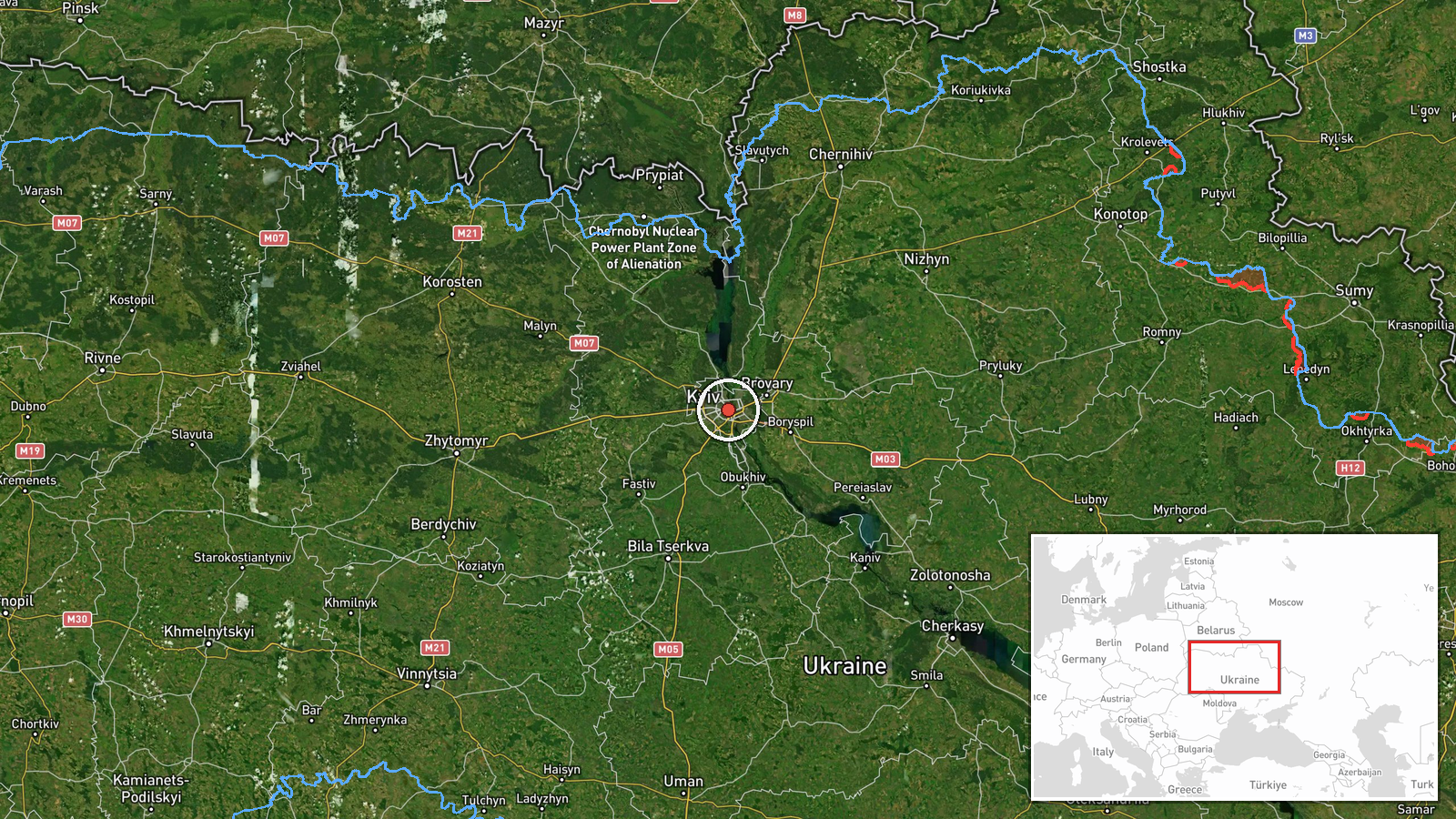
Kyiv city and surrounding Kyiv Oblast, central Ukraine. The intercept occurred in airspace over the capital region, coordinates approximately 50.45°N, 30.53°E. Kyiv is the primary urban and administrative target for Russian long-range strikes, surrounded by populated districts vulnerable to drone and missile impacts.
Related events nearby
- Ukraine confirms first combat deployment of FP-7 tactical ballistic missile in ongoing war against Russia. Ukr2026-10-01 15:45 UTC · Statement · Kyiv, Ukraine
- Russian drones struck a major bridge in Kyiv. Two unmanned aircraft hit the structure, per Kyiv's mayor. Part 2026-10-01 10:02 UTC · UAS Strike · Kyiv, Kyiv City, Ukraine
- Ukrainian air defense shot down or suppressed 87 Russian Shahed, Gerbera, and decoy drones in overnight attack2026-10-01 05:06 UTC · Air Defense · Kyiv, Kyiv Oblast, Ukraine
- Air raid sirens activated across Kyiv and Kyiv Oblast. All-clear signal issued ('дорозвідка до відбою') follow2026-10-01 00:01 UTC · Siren · Kyiv, Kyiv Oblast, Ukraine
- Russian Shahed-136 reactive (jet-engine) kamikaze drone detected in transit over Solomianka district, Kyiv, he2026-10-01 05:52 UTC · Drone Transit · Solomianka, Kyiv, Ukraine
▶ View this event on the live map
Intel Mapper aggregates open-source reports from monitored Telegram and X channels, geolocates them, cross-checks duplicates across sources and assigns a confidence score. Entries are updated as new confirmations arrive. Read how we verify events.