Twelve nations announce coordinated bans on settlement goods trade
What happened
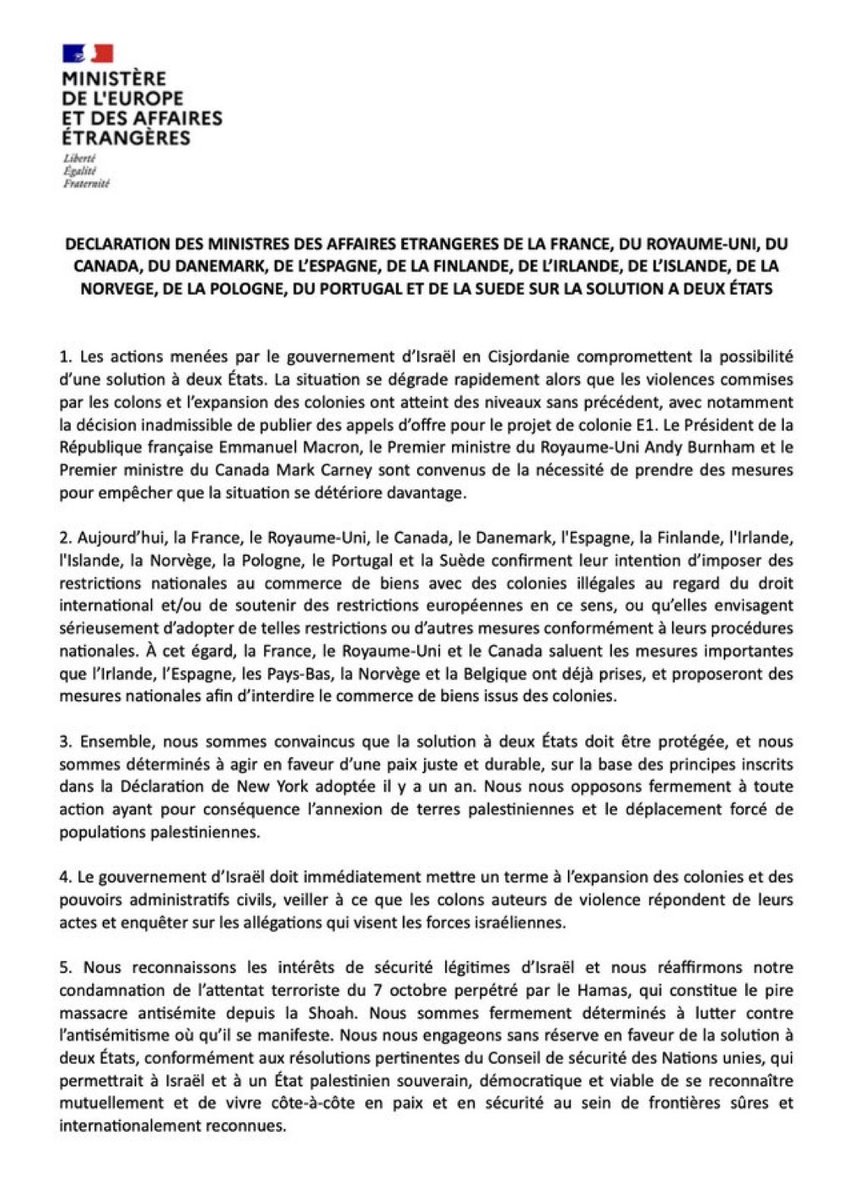
Twelve Western nations—France, UK, Canada, Denmark, Spain, Finland, Ireland, Iceland, Norway, Poland, Portugal, and Sweden—issued a joint statement on September 8 announcing coordinated national bans on trade in goods produced in Israeli settlements in occupied Palestinian territories. The move represents an attempt to enforce restrictions on settlement products outside the framework of European Union-wide negotiations, which have remained deadlocked. The statement was announced in Paris.
Context and assessment
The coordinated action reflects growing international pressure on Israel's settlement policy, particularly as EU consensus has proven difficult to achieve on unified sanctions or trade restrictions. Settlement goods typically include agricultural products, minerals, and manufactured items; bans aim to penalize economic activity in territories classified as occupied under international law. This announcement indicates that individual nations are willing to act unilaterally when multilateral mechanisms stall, a pattern seen increasingly in responses to protracted conflicts. The measure may signal frustration among Western allies with the pace of EU decision-making and reflects broader divisions over Israel policy within transatlantic forums.
Sources and confidence
Reported by Telegram channel @warmonitors on September 8, 2026. Single source with no cross-confirmation noted in available data. Confidence score of 6.0 reflects the official nature of a joint statement but limited source diversity. Confirmation from national governments or major news agencies would strengthen confidence; retraction by any signatory nation would lower it significantly.
Location
Paris, France, where the joint statement was announced. Paris serves as a major diplomatic hub and seat of numerous international organizations. The statement itself concerns settlements in occupied Palestinian territories (West Bank), though the announcement venue is the French capital.
Related events nearby
- France, UK, Canada, and nine other countries announce coordinated national restrictions on goods from Israeli 2026-09-08 12:31 UTC · Statement · Paris, France
▶ View this event on the live map
Intel Mapper aggregates open-source reports from monitored Telegram and X channels, geolocates them, cross-checks duplicates across sources and assigns a confidence score. Entries are updated as new confirmations arrive. Read how we verify events.