Russia launches five Shahed-136 drones from Donetsk toward Ukrainian territory
What happened
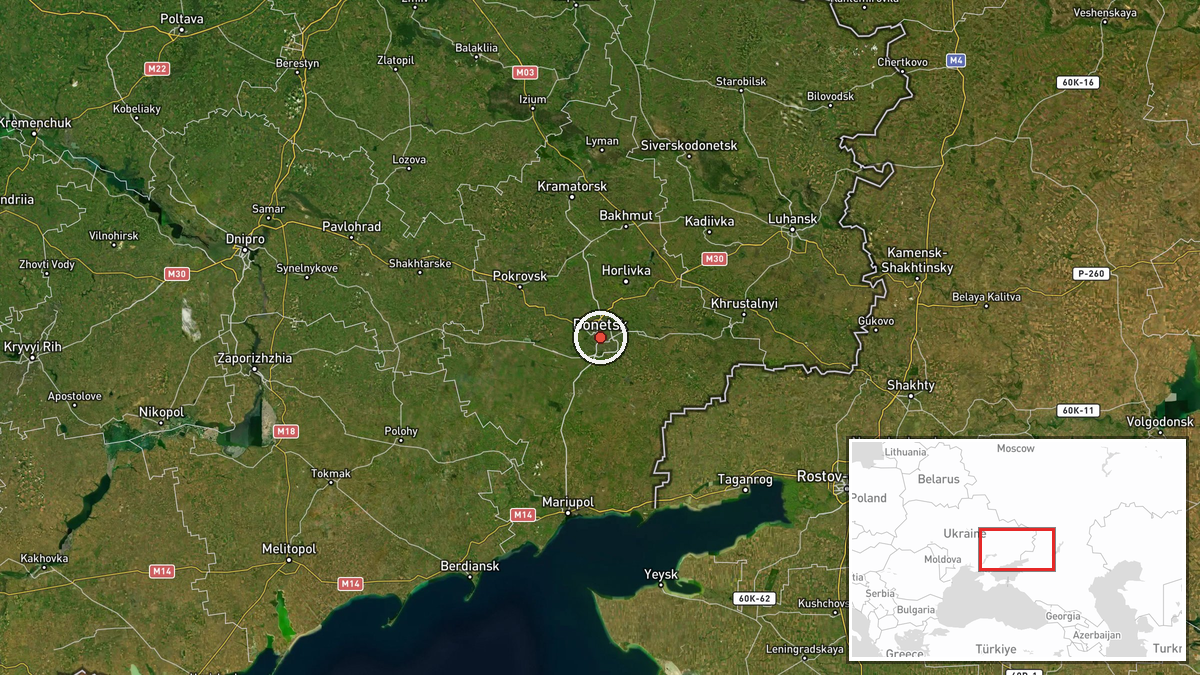
Russian forces reportedly launched five reactive jet-powered unmanned aerial vehicles (UAVs) of the Shahed-136 variant from positions in Donetsk on 30 August 2026 at 22:13 UTC. The Shahed-136 is a loitering munition designed for reconnaissance and strike missions. The report was published via Telegram channel @war_monitor, which monitors Russian military operations.
Context and assessment
This strike is consistent with Russia's sustained aerial campaign across Ukraine documented on 30 August, which included 57 airstrikes and deployment of over 7,000 kamikaze drones across multiple sectors. The Shahed-136 drones launched from Donetsk represent part of a broader pattern of attrition warfare targeting Ukrainian infrastructure and military positions. Donetsk, controlled by Russian forces since early 2022, serves as a key logistics and launch hub for Russian air operations in eastern Ukraine. The scale of drone activity on this date—with thousands deployed across fronts—suggests either an intensified operational tempo or a coordinated campaign across multiple axes.
Sources and confidence
Single Telegram source (@war_monitor), a monitoring channel tracking Russian military operations. No secondary confirmation reported. Confidence score of 6.0 reflects the single-source reporting and regional-level geolocation precision. Cross-confirmation from Ukrainian air defense statements or visual verification would raise confidence; contradictory reporting or absence of corroboration would lower it.
Location
Launch point identified as Donetsk, Donetsk Oblast, Russian-controlled territory in eastern Ukraine. Geolocation precision is regional rather than pinpoint. Donetsk city lies approximately 650 km southeast of Kyiv and serves as a major administrative and logistical center for Russian operations in the Donbas region.
Related events nearby
- Ukrainian General Staff reports 173 combat clashes on 31 Aug 2026. Russia conducted 66 airstrikes, deployed 6,2026-08-31 19:08 UTC · Combat · Pokrovsk, Donetsk Oblast, Ukraine
- Ukrainian forces destroyed Russian military supply depots in Verkhnokamyanka, Luhansk Oblast and Popovo-Lezhac2026-08-31 09:12 UTC · UAS Strike · Verkhnokamyanka, Luhansk Oblast, Russia (Russian-c
- Ukrainian forces destroyed an enemy drone control point near Huliaipole in Zaporizhzhia Oblast. The strike tar2026-08-31 09:11 UTC · UAS Strike · Huliaipole, Zaporizhzhia Oblast, Ukraine
▶ View this event on the live map
Intel Mapper aggregates open-source reports from monitored Telegram and X channels, geolocates them, cross-checks duplicates across sources and assigns a confidence score. Entries are updated as new confirmations arrive. Read how we verify events.