Ukraine reports 405 Russian drones and cruise missiles shot down in overnight attack
What happened
Ukrainian air defenses reportedly destroyed or suppressed 405 enemy unmanned aerial vehicles and four S-8000 'Banderolle' cruise missiles during an attack lasting from 18:00 on 12 September through the early morning of 13 September. Russia launched approximately 453 total attack drones of Shahed and Geran-2 types, along with decoy variants and cruise missiles, from staging areas near Shatalov, Orel, and Kursk in western Russia, as well as from occupied Crimea. Ukrainian aviation, air defense missile forces, electronic warfare units, and mobile fire groups engaged the incoming weapons. Ukrainian officials recorded impacts at 13 locations across the country, with debris falling at seven additional sites.
Context and assessment
This overnight attack represents a continuation of sustained Russian air operations against Ukrainian territory, following a similar large-scale strike on 12 September in which approximately 336 of 410 drones were reported intercepted. The consistent use of Shahed-136 attack drones from multiple launch points in western Russia and Crimea reflects Russia's strategy of attrition through volume, accepting significant loss rates in exchange for sustained pressure on Ukrainian air defenses and civilian infrastructure. The scale of this particular strike—453 weapons—indicates no diminishment in Russian drone production or willingness to expend them, despite reported heavy losses. The distribution of launch sites across Russian territory and the Black Sea suggests an effort to complicate Ukrainian air defense responses by forcing interception across multiple vectors simultaneously.
Sources and confidence
Reported by the General Staff of Ukraine's Armed Forces via official Telegram channel at 08:00 UTC on 13 September. This represents the primary official source; no cross-confirmation from independent observers or third parties is noted in available data. Confidence score of 8.0 reflects the official nature of the source and consistency with reported Ukrainian air defense capabilities, though final intercept figures often require adjustment as damage assessments continue. Confirmation from civilian impact reports or allied intelligence assessments would raise confidence; significant downward revision of intercept claims in subsequent hours would lower it.
Location
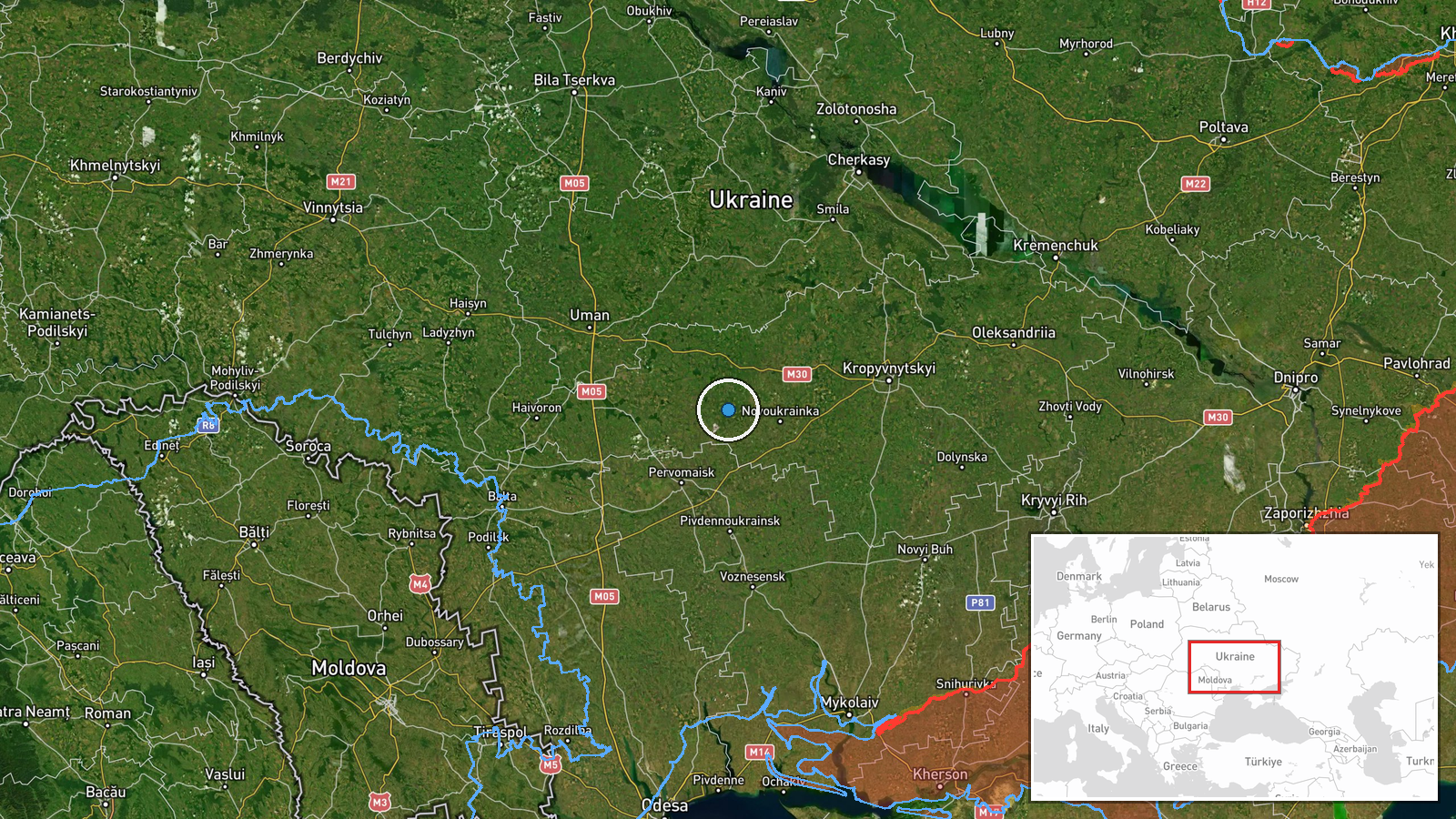
Ukraine nationwide. The attack targeted multiple locations across the country, with confirmed impacts recorded at 13 separate sites and debris at seven additional locations. Launch origins in western Russia (Shatalov, Orel, Kursk regions) and from Gvardiyskoye in occupied Crimea, with weapons transiting across the Black Sea and air space above central and eastern Ukraine. Geographic precision is regional rather than specific, reflecting the nationwide scope of simultaneous air defense operations.
Related events nearby
- Ukraine's air defense system shot down/suppressed 336 of 410 Russian attack drones (including 23 of 37 reactiv2026-09-12 15:37 UTC · Air Defense · Ukraine (nationwide air defense operations)
- Ukrainian air defense warning: elevated threat of Shahed-136 drone strikes and ballistic missiles across Kyiv,2026-09-12 19:09 UTC · Siren · Ukraine (nationwide)
▶ View this event on the live map
Intel Mapper aggregates open-source reports from monitored Telegram and X channels, geolocates them, cross-checks duplicates across sources and assigns a confidence score. Entries are updated as new confirmations arrive. Read how we verify events.