Escalating Rhetoric and Strikes Across Middle East; Ukraine Faces Renewed Russian Bombardment
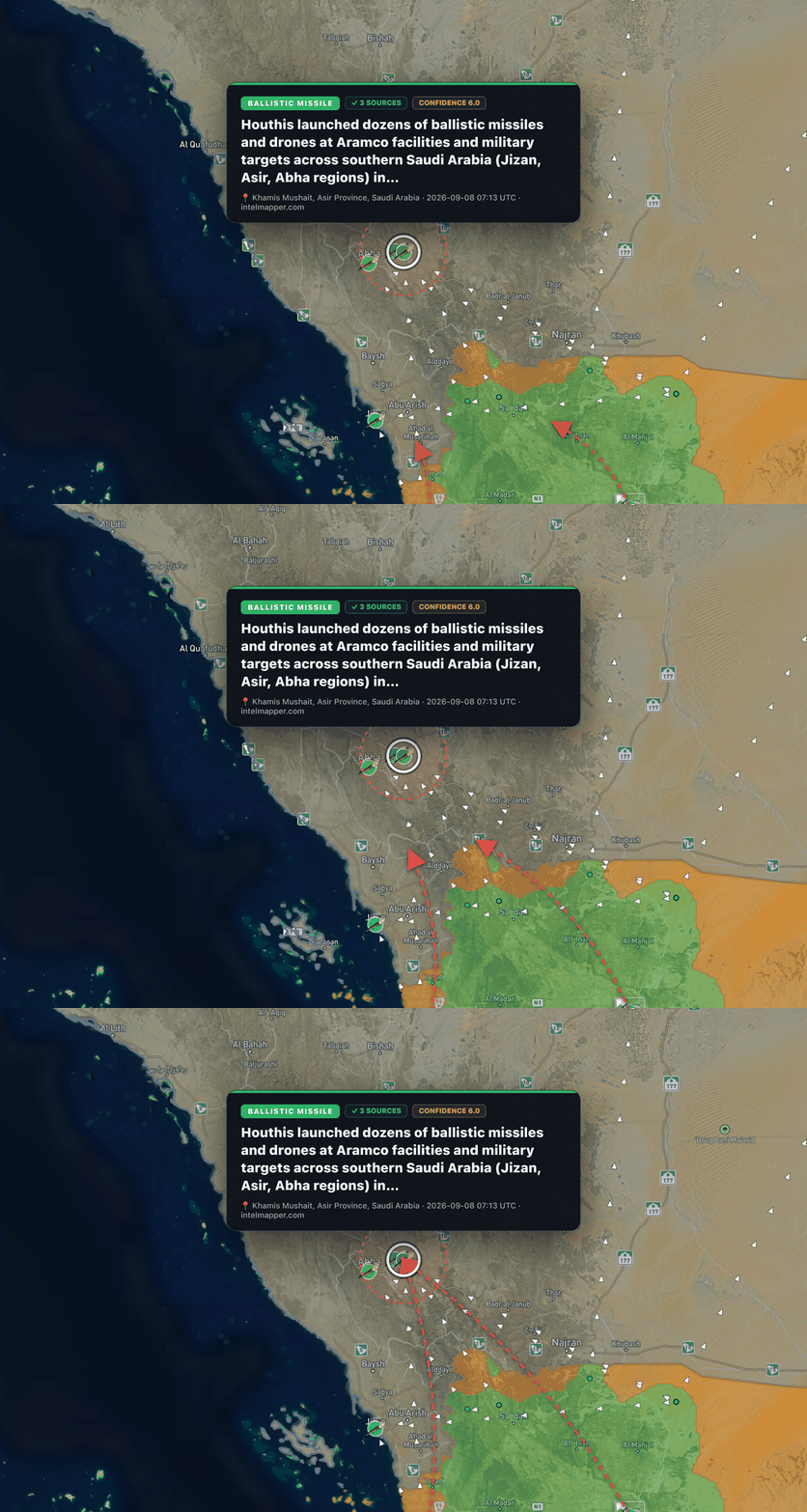
Houthis launched dozens of ballistic missiles and drones at Aramco facilities and military targets across southern Saudi Arabia (Jizan, Asir
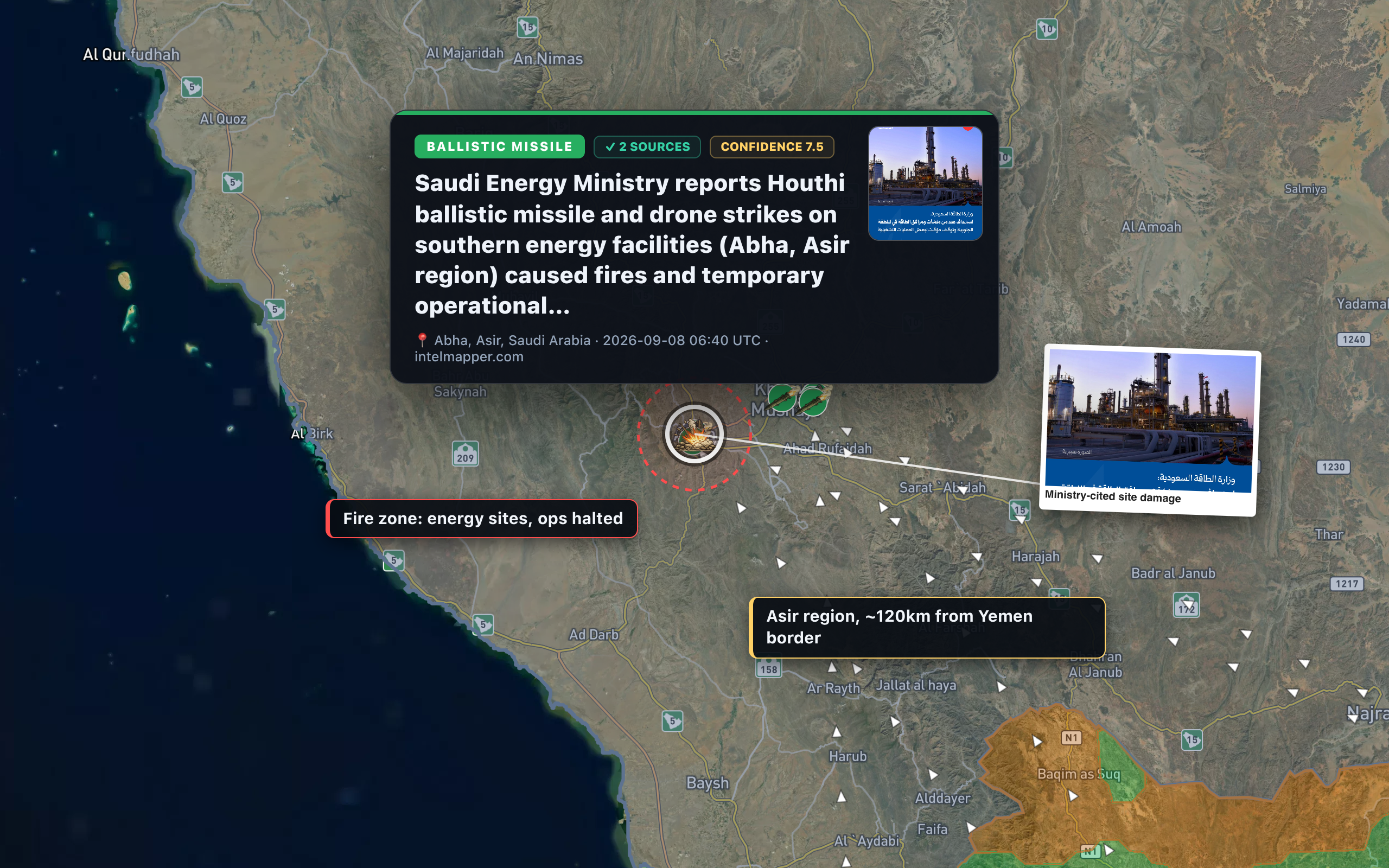
Saudi Energy Ministry reports Houthi ballistic missile and drone strikes on southern energy facilities (Abha, Asir region) caused fires and
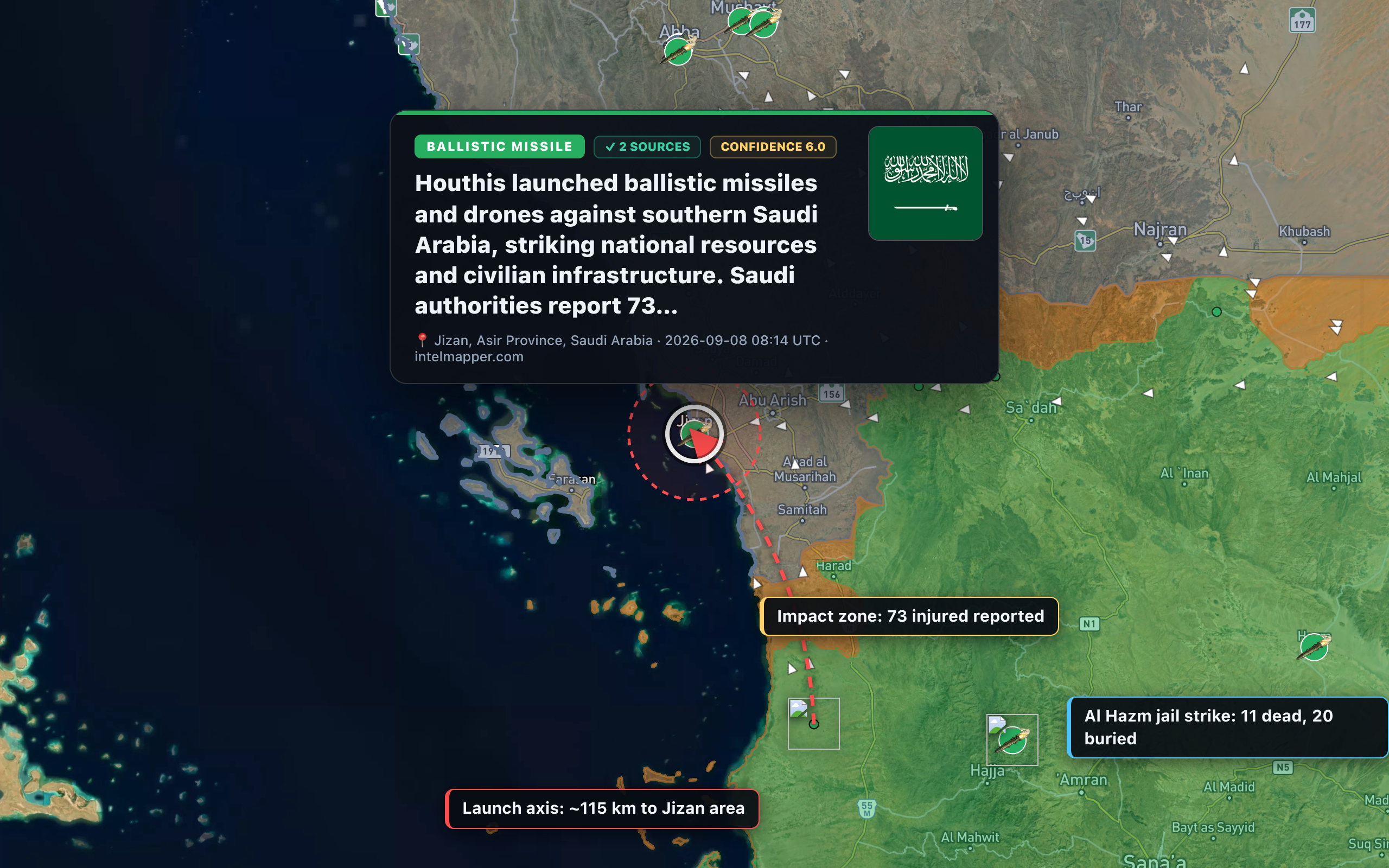
Houthis launched ballistic missiles and drones against southern Saudi Arabia, striking national resources and civilian infrastructure. Saudi
The Israeli-Palestinian dispute entered a diplomatic inflection point on 8 September as the UK, France, Canada, and nine additional nations announced coordinated national sanctions against Israeli settlements in the West Bank, circumventing EU-wide deadlock. UK Foreign Secretary Ed Miliband made the strongest official statement to date, accusing Israeli settlers and the government of ethnic cleansing and declaring the Palestinian occupation illegal—language previously confined to human rights organizations. Israeli Foreign Minister Gideon Sa'ar responded by announcing closure of the UK consulate in East Jerusalem and expulsion of British MPs from a Gaza support center, marking an unusually direct diplomatic escalation. U.S. Secretary of State Marco Rubio rejected the multilateral approach, stating the U.S. would not follow Britain's lead, signaling a transatlantic divide on settlement policy. The UN Commission of Inquiry simultaneously warned that Israeli military operations in southern Syria, including raids, incursions, and detention of 49 Syrian civilians including children, may constitute war crimes.
Houthi forces conducted sustained ballistic missile and drone strikes against southern Saudi Arabia across the Asir, Jizan, and Najran regions, reportedly targeting energy infrastructure and civilian areas in response to 121 Saudi airstrikes. The Saudi Energy Ministry confirmed fires and temporary operational shutdowns at multiple facilities in Abha and Asir; authorities reported 73 injured from strikes on civilian infrastructure in Necran and Abha. Russian Foreign Minister Sergey Lavrov stated that Houthi strikes would 'backfire' while reiterating Russian support for Riyadh's pursuit of a peaceful settlement roadmap in Yemen—a position balancing public backing for Saudi Arabia with implicit criticism of escalation. Meanwhile, Saudi-backed Yemeni government forces advanced in the Al-Jawf province and conducted artillery strikes and combat operations near Taiz, suggesting a widening military confrontation with Houthi positions beyond the immediate Saudi border.
U.S.-Iran military friction increased with Tehran reporting successful interception of a U.S. MQ-1 Predator drone over the Strait of Hormuz, with footage released confirming the shootdown, and the IRGC Navy claiming seizure of a modern U.S. unmanned underwater vehicle at the Strait entrance. The U.S. military presence in the Middle East reportedly faces significant reduction according to single-source reporting. Additionally, Trump announced without explicit naming that a nation seeking nuclear weapons 'no longer has any chance of obtaining them,' widely interpreted as referencing Iran's nuclear program. Syrian Foreign Ministry condemned Houthi strikes on Saudi targets, expressing solidarity with Riyadh's sovereignty protection. Turkish and Syrian diplomacy continued with the Syrian Foreign Minister meeting Turkish counterpart Hakan Fidan in Ankara, alongside high-level U.S. engagement with Turkish officials including Middle East Special Representative Tom Barrack.
Key developments
- UK, France, Canada, and nine other nations announced coordinated sanctions against Israeli settlements; U.S. rejected multilateral approach, widening transatlantic divide.
- Houthis conducted sustained ballistic-missile and drone strikes on southern Saudi Arabia's energy infrastructure; 73 reported injured in civilian areas.
- Russia resumed large-scale assault on Kyiv after three-day pause, launching 166 drones and dozens of missiles; U.S. and European officials assess war will extend into 2027.
- Ukraine received UK £100 million and German air-defense packages; unveiled domestically-built Koral surface-to-air missile at Polish defense expo.
- UN Commission of Inquiry warned Israeli operations in southern Syria may constitute war crimes; Iranian forces reported downing U.S. MQ-1 Predator drone over Strait of Hormuz.
- Ukrainian forces achieved tactical gains southwest of Kostyantynivka; Ukrainian drones struck Saratov oil refinery, causing fires.
- Russian drone incursion into Romanian airspace triggered nationwide alert system; Lavrov warned Britain supporting Ukraine to the end would bring unhappy outcome for Kyiv.